


A Houthi official has said Saudi warplanes struck Yemen, killing three people, including two children, while Human Rights Watch accused the Houthi rebels of possible war crimes with their attacks on commercial vessels.
The renewed fighting in Yemen is endangering civilians and threatening shipping through the Red Sea, a route that has become more important because of disruptions in the Strait of Hormuz since the US launched its war against Iran.
The Associated Press could not independently verify the Houthi official’s claim. The official did not say what the Saudi warplanes had targeted.
Anees al Asbahi, a spokesperson for the Houthi-run Health Ministry, said in a post on X on Tuesday that Saudi airstrikes killed the three in Yemen’s Taiz province.
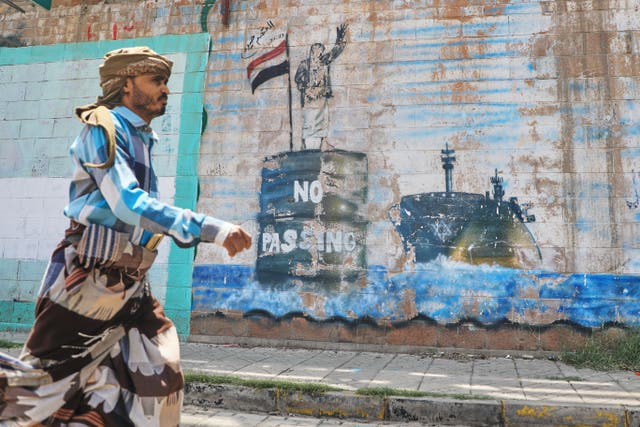
Mr Al-Asbahi said another two other people were injured in the strikes.
Save the Children said on Tuesday that youngsters accounted for more than a fifth of all people killed or wounded between August 1 and September 9. The full civilian casualty toll is estimated at some 117 killed and 206 wounded.
Between September 3 and 9 alone, 43 children were killed or wounded, the highest weekly casualty toll recorded by the relief agency in a year.
The escalation comes as the Iran-backed Houthi rebels have seized the strategic islands of Greater and Lesser Hanish in the southern Red Sea, bolstering their ability to control a key maritime shipping route.
Iran effectively closed the Strait of Hormuz — through which a fifth of the world’s traded oil and gas transits in peacetime — in the opening days of the war. The Saudis have since used the Bab el-Mandeb Strait, which leads out of the Red Sea, for crude oil exports.
The Houthis’ latest seizures, which follow their capture of the Red Sea port of Mokha and a strategic island last week, put more pressure on Saudi shipments and, in turn, global oil supplies and prices.
This could give Iran additional leverage in its war with the United States.
Human Rights Watch said on Tuesday that at least three attacks by Houthi rebels against commercial vessels in the Red Sea and the Gulf of Aden between July 20 and August 24 could amount to war crimes.
The Houthi attacks against Saudi-linked shipping started in mid-July in the latest flare-up of violence in the Yemen civil war.
Niku Jafarnia, a Yemen and Bahrain researcher at Human Rights Watch, said that irrespective of any politics involved, “attacks on civilian crews carried out deliberately or recklessly are war crimes”.
The Houthis say their attacks on Saudi-linked shipping are retaliation for the Saudi-led coalition blockade on the Houthi-held areas in Yemen, a measure related to Yemen’s decade-old civil war.
The human rights organisation said the Houthis claimed to have attacked at least nine vessels over the span of a month, including two Saudi-flagged vessels, a Tanzania-flagged vessel, and a Dominica-flagged vessel.
The rights group urged the Houthis to “immediately and unconditionally end all unlawful attacks on civilian ships”.
Turkish Foreign Minister Hakan Fidan on Tuesday called for renewed diplomatic efforts to swiftly quell regional tensions.
Mr Fidan told a joint news conference with his Azerbaijani counterpart in Baku that “safe, uninterrupted and free passage” through the Strait of Hormuz should resume and that the “pre-war status quo should be restored as soon as possible”.
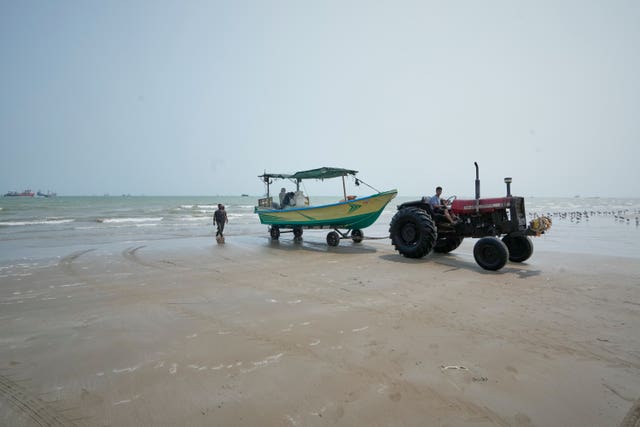
Oman’s Minister of Energy and Minerals Salim Al-Aufi called for alternative routes for liquefied natural gas (LNG) to bypass the Strait of Hormuz, either through Oman or through Yemen.
“Diversify your options to get the resources out of the area,” he told the world’s largest natural gas conference, Gastech, in Bangkok.
Abdul Rahman Al Yahyaei, chief executive of Oman’s state-owned Integrated Gas Company (IGC) said the closure of Saudi Arabia’s East-West pipeline, which was damaged in a strike last week, “means more stress in the market, high prices for both gas and oil, and it means more disruption to global supplies”.
Alternatives through Oman would require the construction of new pipelines that could be targeted by drones and missiles. Despite these risks, Mr Al Yahyaei told The Associated Press that these options are being weighed more seriously than ever.
Mr Al Yahyaei said the situation might last “slightly longer than anticipated” despite US President Donald Trump’s assurances that it might be resolved soon. He warned that the impact on global energy supplies could last “at least another year”.
Later on Tuesday the US military said it had “forcefully responded” against two Iranian boats that were trying to steal a drone ship in the waters off Iran.
The drone involved is a Saildrone, a small craft that can operate by itself, Captain Tim Hawkins, US Central Command spokesman, said Tuesday. CentCom has been using them to surveil maritime traffic.
Iranian state media reported on Monday that two fishing boats came under attack in Hormozgan province and that several fishermen were missing, citing a provincial official.
Mr Hawkins said all the command’s surface drones “remain fully accounted for”.
Elsewhere, China’s Foreign Ministry said Iran’s Foreign Minister Abbas Araghchi will visit the country on Wednesday and meet his Chinese counterpart Wang Yi.


Share