


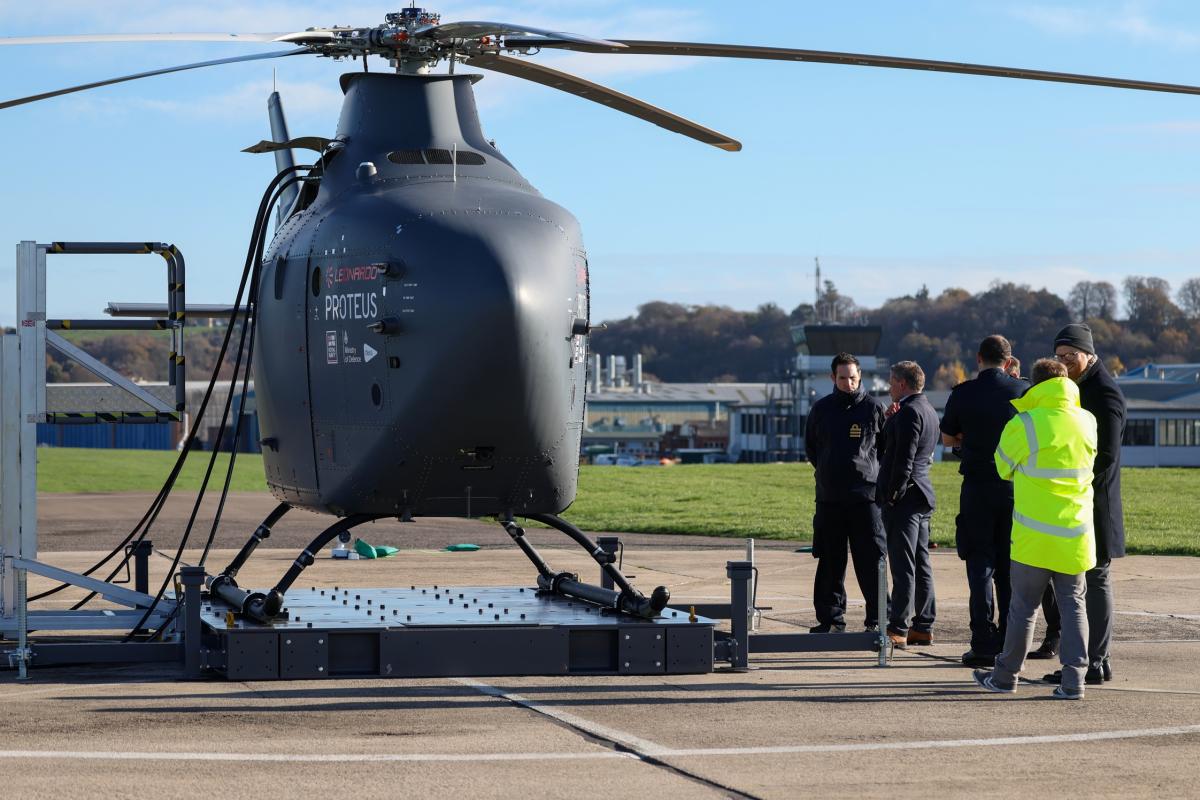
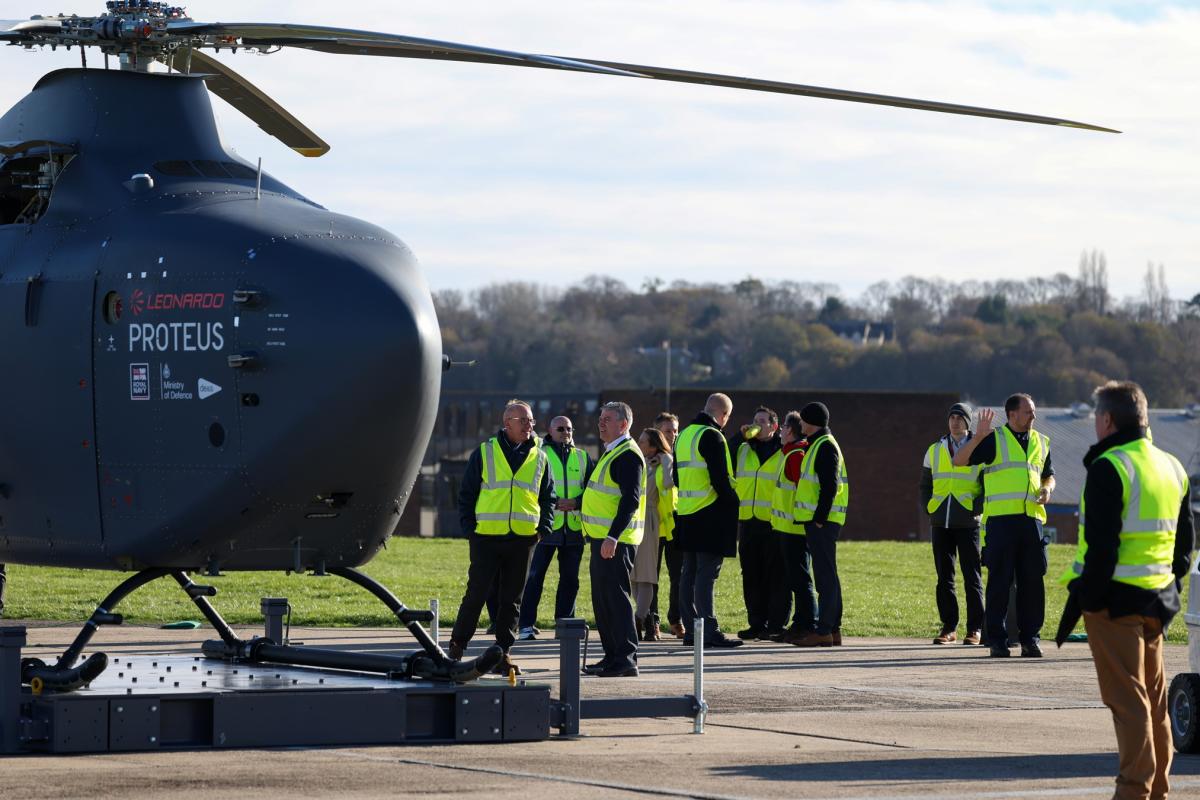

Engineers at Leonardo in Yeovil have hit a "key milestone" for future Royal Navy drone flights by finishing ground trials of a "next-generation helicopter".
Senior MOD officers and experts visited Leonardo’s Yeovil site to watch the new Proteus helicopter ‘ground running’ and see how its software and Artificial Intelligence will "be key" to its success.
Proteus is the size of a normal helicopter but has no windows, as it is flown remotely rather than by a pilot on board.
During the ground runs, engineers tested the uncrewed helicopter’s engines, systems and rotor blades, clearing it for flight in the coming weeks.
Built at Leonardo in Yeovil in under two and a half years, the £60m Proteus Technology Demonstrator is believed to be one of the world’s first full-sized autonomous helicopters.
This is the first step towards a truly autonomous VTOL aircraft in this weight class, helping designers and the Royal Navy see what future drones could do.
They will test how these aircraft work alone and alongside crewed and uncrewed aircraft as part of a ‘hybrid air wing’.
READ MORE: Thousands at Somerset aerospace company secure pay rise after strike action
READ MORE: Chard dad keeps army helicopters combat ready for multinational training exercise
READ MORE: Royal Navy warship and helicoptor from Yeovilton tracks Russian vessels
Captain David Gillett, head of maritime aviation and carrier strike in the Royal Navy’s Develop Directorate, said: “It’s been a huge pleasure to work with Leonardo and across Defence, as one team to deliver Proteus.
“It combines cutting-edge technology and the experience of recent conflicts and has enormous potential to shape the Royal Navy’s future hybrid air wing.”
Nigel Colman, managing director of helicopters UK at Leonardo, said: “Leonardo is leading the way globally in autonomy, supported by the Royal Navy. Proteus is equipped with cutting-edge onboard software capabilities, carrying a suite of sensors and systems that allow it to sense its environment, make decisions and act accordingly.
“By embracing the potential of uncrewed helicopters like Proteus, the Royal Navy aims to search wider stretches of ocean for longer without straining aircrew, who could be deployed on other critical missions.
“While Proteus is not flown by a pilot, the technology demonstrator always has an operator in control of the system, working within predesignated safe limits and customer-defined rules of engagement.
“Going forward, the demonstrator will be assessed for its ability to support anti-submarine operations to help protect UK waters.”


Share